
About Inthrface
Johan S. Roos joins Inthrface as Partner & Investor
As co-inventor of LEGO® SERIOUS PLAY®, Johan Roos has helped shape one of the most influential facilitation methods of the last twenty-five years. Through this partnership, Johan and Inthrface deepen a shared commitment to research, quality assurance, and the continued development of the method.
A partnership grounded in theory and practice
We have sat down with Prof. Johan S. Roos regarding his new role as a Partner and Investor at Inthrface, and asked him a couple of questions, which you can read here.
You describe yourself as a practitioner-scholar. What does that mean in practice, and how does it connect to LSP?
“I am a practitioner-scholar. That is probably the most honest two-word description. I have spent my career moving between academic research and real organizational leadership, and the combination shapes how I think about everything, including LSP.
The short version of the LSP story: in the mid-1990s I was a professor at IMD in Lausanne, working on strategy with Bart Victor. We were experimenting with how to help senior leadership teams think differently, not just more efficiently, but more imaginatively. Kjeld Kirk Kristiansen, the owner of the LEGO® Group, became a supporter after early experiments in executive education. From 1997 to 1999, Bart and I experimented, prototyped, named, and developed what would become LEGO® SERIOUS PLAY®. We published the first paper on serious play in 1998, a peer-reviewed article in the European Management Journal followed in 1999, and Bart and I even co-filed the patent applications with a LEGO® representative in 2001 and 2006.
Kjeld Kirk Kristiansen deserves more credit than he typically receives in these conversations. He was not simply a sponsor. He was intellectually engaged with the questions we were asking: why do leadership teams so often fail to access what they know? Why do smart people in rooms together produce mediocre thinking? When we suggested that LEGO® bricks had something to offer beyond childhood play, he first hesitated, because some of his close advisers thought I was nuts, but then he saw the potential. He was right, but not for the obvious reasons. The bricks mattered because building with your hands activates thinking that verbal exchange alone cannot reach. We grounded that intuition in complexity theory, constructionist learning, and research on collective intelligence.
Kjeld Kirk Kristiansen and I established and led the Imagination Lab Foundation from 2000 to 2006, chaired by him, which continued the theoretical development and sponsored research across the world. That foundation kept serious scientific attention on the method at a time when commercial pressure might otherwise have reduced it to a set of entertaining exercises.
When LEGO® made the method open source in 2010, access expanded significantly. That was the right decision. It also brought wide variation in how the method is understood and practiced. Some of what gets delivered today under the LSP name has very little connection to its deep foundations. The underlying principles, what you build with your hands reflects what you know, what you explain to others consolidates and expands that knowledge, what you create together enables systems thinking that verbal discussion rarely achieves, those principles have not changed, because they are grounded in how human cognition works. What has changed is how carefully, or carelessly, practitioners connect their work to those foundations. That tension between access and quality is one of the things that drives my current work.”
“A well-designed LSP session with a focused challenge can produce sharper clarity in three hours than six months of email threads and slide decks. What LSP requires is attention, and attention is a scarce resource for most professionals. That fact is itself a symptom of the problem.”
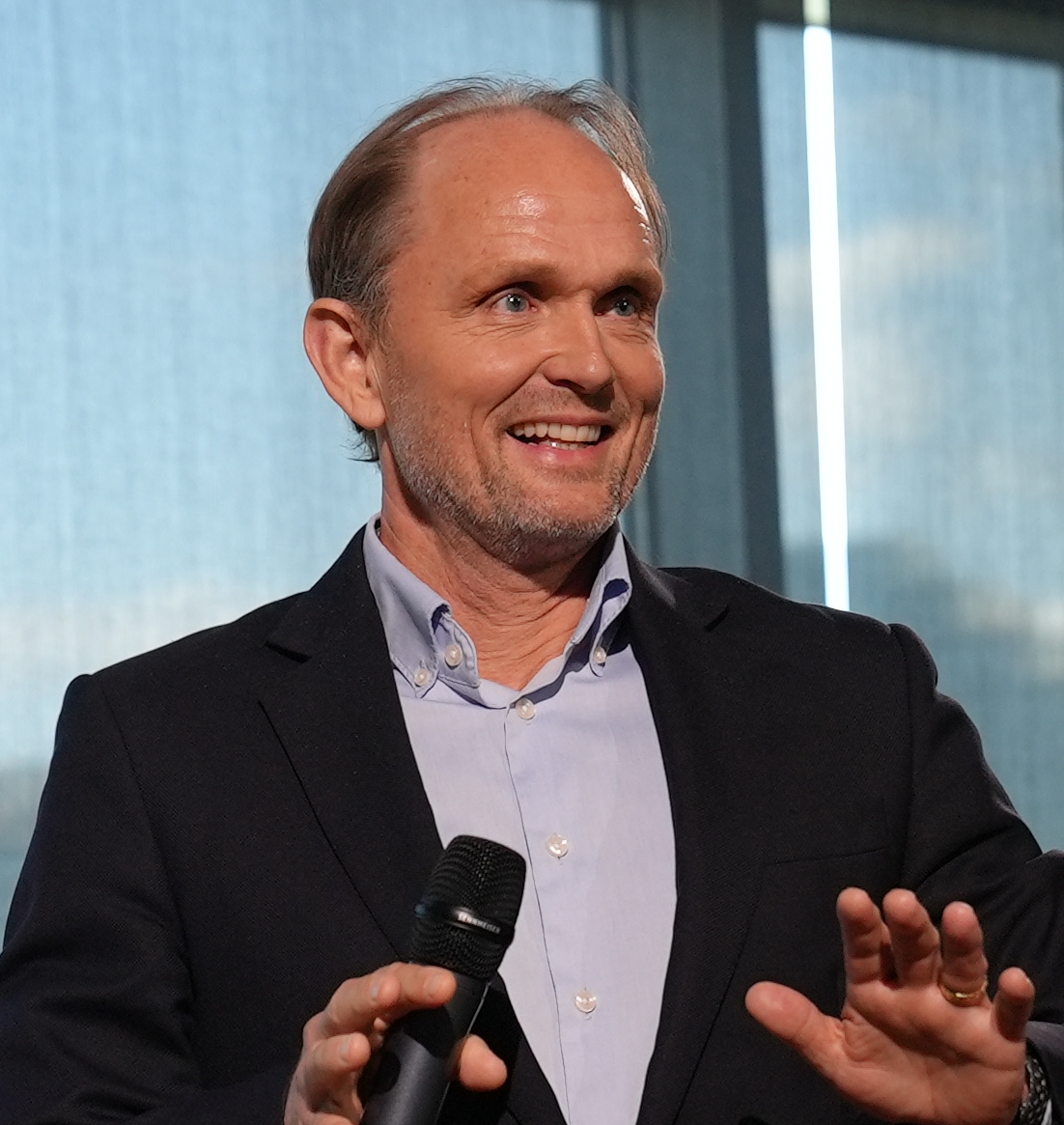
Prof. Johan S. Roos.
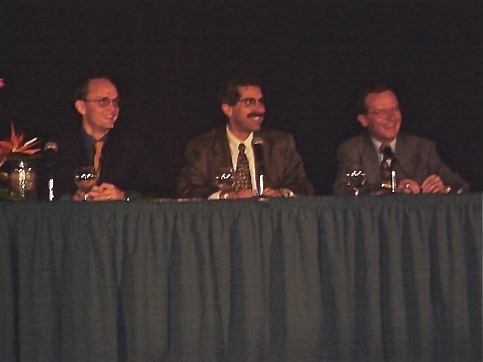
Prof. Johan S. Roos (on the left) together with Kjeld Kirk Kristiansen (on the right). From 1999.
In an AI-driven world, is LSP still relevant?
“More relevant than ever.
My book Human Magic, publishing in April 2026, addresses this directly. The argument is that the five capabilities defining genuinely effective human performance, curiosity, creativity, critical thinking, communication, and collaboration, are precisely the capabilities that AI puts under pressure. Not because AI eliminates them, but because the speed and convenience of algorithmic assistance creates an incentive to shortcut them. Why struggle through genuine inquiry when a tool can generate the answer? Why tolerate the discomfort of real disagreement when you can ask an LLM to synthesize positions?
LSP addresses that incentive problem structurally. When everyone in the room builds a model and every model gets explained and heard, you cannot delegate your thinking to an algorithm. The thinking must be embodied and individual before it becomes collective. That is a recognition that certain kinds of organizational intelligence can only be generated through physical, social, and metaphorical engagement. The organizations that will navigate the AI era well are ones that invest in developing the human capabilities that AI cannot replicate, while using all the tools that AI makes available. LSP, done well, is one of the most powerful instruments we have for that investment.”
Some argue that LSP is too slow for today’s fast-paced world.
“They have confused speed of activity with quality of thinking.
Organizations that move fast without thinking well are impulsive, not agile. The cost of that impulsiveness, in poor decisions, misaligned teams, and strategies that fall apart on contact with reality, is enormous. The pace at which organizations rush from meeting to decision to action often reflects anxiety, not capability.
A well-designed LSP session with a focused challenge can produce sharper clarity in three hours than six months of email threads and slide decks. What LSP requires is attention, and attention is a scarce resource for most professionals. That fact is itself a symptom of the problem.
The Real Time applications that Inthrface and I have developed over the last six years, Real Time Crisis®, Real Time Change®, Real Time Purpose®, Real Time Reframing®, are explicit responses to this objection. We are currently developing further applications directly from the Human Magic research, including Real Time Creativity® launched in 2025, and Real Time Curiosity® to be launched this year. They demonstrate that the method scales to urgency. The question is never whether there is time for good thinking. The question is whether the cost of bad thinking is acceptable.”
What is your relationship with Inthrface, and why formalize it now?
“It has developed organically, which is usually how the best relationships do. I first encountered Micael Buckle’s work when he approached me in London in 2016, and what struck me immediately was the seriousness of his approach. He was asking the same questions I was asking: not just how to run a good workshop, but why the method works, under what conditions, how to ensure the practice reflects the theory, and how to ensure that LSP brings genuine value to end users.
(…) Inthrface is probably the best.
That should be obvious, but I have observed with some concern the rapid growth of a train-the-trainer business that generates certified facilitators who rarely use the method seriously.
In Micael Buckle I saw someone who both wanted to deeply understand the approach and who was focused on quality and end user value, not only on the next cohort of new facilitators.
Over the years that shared orientation became a genuine collaboration. We have co-organized the International LSP Conference in Billund for nearly a decade, this year for the tenth time. We have co-authored research. We worked together on the Real Time curricula. And the Real Time applications we have developed together are, to my mind, the most significant principled innovation in LSP practice since the method became open source. Real Time Crisis® was developed from real experience with organizations navigating genuine crises. Real Time Change® was grounded in research I did with Matt Statler. Real Time Purpose® draws on Ranjay Gulati’s work on purpose-driven strategy combined with my own work on strategic identity. Real Time Reframing® is grounded in Amy Edmondson’s research on psychological safety. These are not rebranded versions of the standard LSP process. They are genuinely new applications built from the theoretical foundations, and both Amy and Ranjay have been part of the conversations.
As for timing: the field is at a challenging inflection point. Since 2010, LSP has reached organizations and contexts it would never have reached otherwise. But the expansion has also created real quality variation. Organizations that have experienced poor quality LSP are often harder to convince than those who have never encountered the method at all. At the same time, the capability challenges of the AI era, the complexity of leading through continuous change, the pressure on collective intelligence in distributed and hybrid work environments, these are real problems, and LSP at its best is one of the most powerful responses to them.
Formalizing this partnership now reflects both dimensions. The field needs quality standards. Inthrface is positioned to help set them. Together we can do something meaningful for the long-term health of the practice.”
Why Inthrface specifically?
“There is a Carlsberg slogan that says ‘Probably the best lager in the world.’ I have always liked that phrasing. The humility of ‘probably’ combined with the confidence of ‘the best.’ Honest and bold at the same time.
If I were to describe Inthrface’s position in the LSP field, I would reach for something similar. Among the many capable facilitators working with LSP across the globe, Inthrface is probably the best. Not because they do the most certification events or workshops. Because they do the hardest work, with the most rigorous standards, and they keep improving and innovating.
Micael Buckle and his team take the theoretical foundations seriously. They ask good questions. They are not satisfied with a workshop that went well. They want to understand why it went well, whether it produced real change, and how to do it better next time. That orientation is rare in any professional community.”
What will your role involve?
“My focus is research and development and advancing the quality of LSP practice, both within Inthrface and in the wider field. It is a partner & advisory role, not an employment, which suits both of us.
My other commitments, speaking engagements, advisory work in business education and beyond, the Drucker Society, my academic work, remain in place. But Inthrface is now the primary professional home for my applied LSP work.
In practical terms that means contributing to the intellectual foundations of Inthrface’s programs and certifications, being involved in the ongoing development of the Real Time applications, and being a visible presence in the Inthrface community at the International LSP Conference and at key events. It means my endorsement carries genuine substance, not just a name attached to marketing materials. I will not be leading workshops daily. Micael Buckle and his team are simply better at that than I am, and I know it. What I bring is the theoretical depth, the research perspective, and the co-inventor credibility that strengthens everything Inthrface does.”
Human Magic: Leading with Wisdom in a World of Algorithms
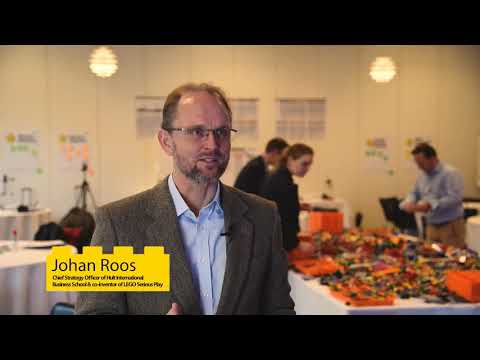
You have a book coming out. Tell us about it.
“Human Magic: Leading with Wisdom in a World of Algorithms is published by Routledge and launches in April 2026.
The book addresses the capabilities that distinguish excellent human performance in knowledge work environments, organized around what I call the 5Cs: curiosity, creativity, critical thinking, communication, and collaboration. These are the capabilities that enable individuals to contribute something that algorithms cannot replicate. The distinctively human contribution comes from the integration of these capabilities with practical wisdom, what Aristotle called phronesis, the judgment that knows when, how, and for whom.
The book is an argument that the most valuable response to the AI era is to invest seriously in developing the capabilities that make us irreplaceable. It is written for AI-excited and AI-anxious individuals alike, for teams, for organizations, and it provides frameworks and tools for doing that, not just aspiring to it. Some forty practitioners and thought leaders from the US to Japan have offered endorsements, and the keynote and podcast calendar is filling quickly.
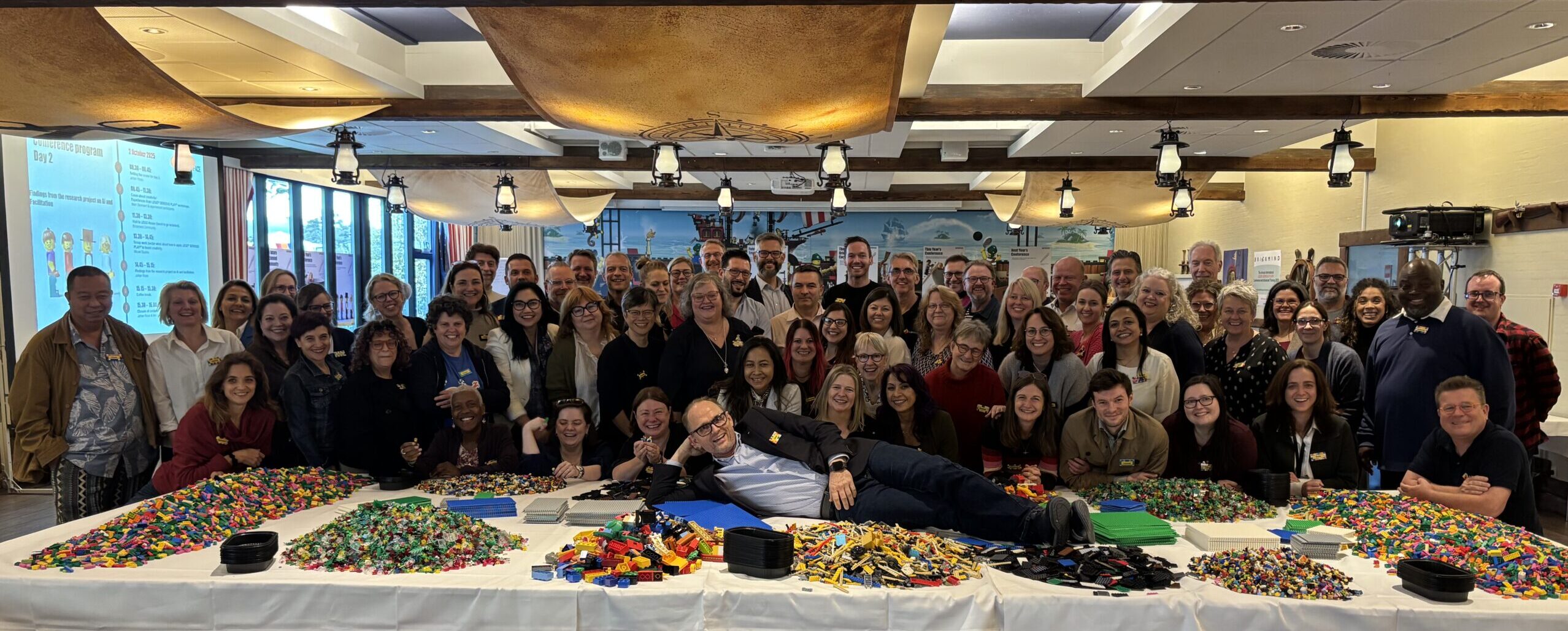
We are also planning a launch event in Denmark, and Inthrface’s involvement makes that feel right. Denmark is where this all began. LEGO® is Danish. Kjeld Kirk Kristiansen is Danish. The International LSP Conference has been held at Hotel LEGOLAND® in Billund for nearly a decade. Standing in that room, with that community, and talking about where twenty-five years of work has arrived, and where it goes next, is something I am genuinely looking forward to.”
Human Magic: Leading with Wisdom in a World of Algorithms can be pre-ordered here: https://humanmagic.one/
[1] Roos, J, Victor, B., and M. Statler, 2004, ‘Playing Seriously with Strategy,’ Long-Range Planning, 37(6): 549-568. DOI: 10.1016/j.lrp.2004.09.005.
[2] Roos, J. and Victor, B. (2018), “How It All Began: The Origins Of LEGO® SERIOUS PLAY®“, International Journal of Management and Applied Research, Vol. 5, No. 4, pp. 326-343. https://doi.org/10.18646/2056.54.18-025
[3] Roos, J. (2025), “Foundations of LEGO® SERIOUS PLAY®: A Reflection by Johan Roos”, Notion. Available at: https://www.notion.so/Foundations-of-LEGO-Serious-Play-A-Reflection-by-Johan-Roos-240114f410b2809495cafffc13a8f589
A message to all facilitators?
“The message I would leave with facilitators and organizations is this: LSP works because the theory behind it is sound. When you do it well, with proper understanding of why each step matters, you are not running an activity. You are activating a form of collective intelligence that changes how teams think and how organizations make decisions. The method deserves that respect. Inthrface has always given it that respect. That is why I am here.”
Check out the website for the book and more: https://humanmagic.one/
Prof. Johan S. Roos’s LinkedIn: https://www.linkedin.com/in/drjohanroos.